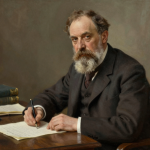
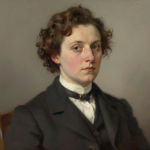
Jacques Lacan
Jacques Lacan was a French psychoanalyst whose rereading of Freud reshaped psychoanalysis in the twentieth century. His work connected psychoanalysis to linguistics, philosophy, structuralism, and questions of subjectivity, desire, and language. Lacan’s importance lies in the fact that he did not merely comment on Freud. He reorganized many Freudian themes by arguing that the unconscious is structured like a language and that the subject is constituted through symbolic relations that exceed conscious mastery. His influence extends well beyond psychoanalysis into literary theory, film studies, political thought, and philosophy.
Formation and career
Lacan was born in Paris in 1901 and trained in psychiatry before becoming a psychoanalyst. His early career included work on psychosis, particularly paranoia, and engagement with surrealist and philosophical circles. This intellectual background helps explain the range of his later seminars and essays. Lacan wrote and taught in a style that was deliberately difficult at times, often drawing on formal logic, rhetoric, and topology. That difficulty became part of his reputation, but it also reflected a conviction that the subject of psychoanalysis cannot be captured by ordinary psychological language alone.
Institutionally, Lacan’s career was marked by disputes about analytic technique and training, especially concerning session length and institutional authority. These disputes eventually led to schisms and to the creation of distinct Lacanian schools. The institutional conflicts were not incidental. They were bound up with his attempt to redefine what psychoanalysis is and how it should be transmitted.
Major concepts
Lacan is commonly associated with the tripartite registers of the symbolic, the imaginary, and the real. The imaginary concerns image, identification, and rivalry; the symbolic concerns language, law, difference, and the network of signifiers in which the subject takes place; the real names what resists symbolization and returns as impossibility, impasse, or traumatic kernel. These registers are not separate compartments but interdependent dimensions of psychic life.
He is also known for the mirror stage, the subject supposed to know, the function of the signifier, and his reworking of desire, fantasy, and lack. Lacan argued that desire does not arise from simple need but from the subject’s insertion into language and from the impossibility of full self-coincidence. In this respect his thought offers a particularly elaborate version of the insight developed in articles such as The Unconscious and Transference.
Clinical orientation
Lacanian psychoanalysis places strong emphasis on speech, equivocation, and the structure of discourse. Symptoms are not treated merely as behaviors to be corrected but as formations organized by language and desire. The analyst’s task is not to supply a harmonious self-image but to listen for the signifying logic through which the subject is divided. This can make Lacanian technique seem austere, especially when compared with more supportive or developmental approaches. Yet the purpose is not coldness for its own sake. It is to avoid reducing analysis to adaptation or suggestion.
Lacan also treated transference in a distinctive way. He explored how the analyst comes to occupy the place of supposed knowledge and how this supposition structures analytic authority. Interpretation, in that context, is less about explanatory commentary than about interventions that shift the relation between signifiers and open a new position for the subject.
Legacy and reception
Lacan’s work generated both fascination and resistance. Admirers regard him as one of the most rigorous readers of Freud and one of the few analysts to rethink psychoanalysis at the level of its conceptual foundations. Critics object to the opacity of his writing, the polemical style of his institutions, or the abstraction of some of his formulations. Even so, the range of his impact is undeniable. Lacanian schools remain active internationally, and his terminology has entered many domains outside strictly clinical psychoanalysis.
The ongoing importance of Lacan lies partly in the challenge he poses. He insists that the human subject cannot be understood as transparent to itself and that desire is inseparable from the symbolic structures through which one speaks and is spoken. Whether approached as theory, clinic, or intellectual history, his work remains one of the major reorganizations of psychoanalysis after Freud.
References
- Lacan, Jacques. Écrits.
- Fink, Bruce. A Clinical Introduction to Lacanian Psychoanalysis.
- Roudinesco, Élisabeth. Jacques Lacan.