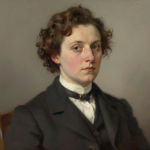
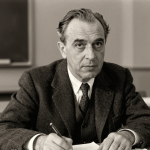
Sigmund Freud
Sigmund Freud was the founder of psychoanalysis and one of the most influential thinkers in the modern history of the mind. His work reorganized discussions of memory, sexuality, dreams, symptoms, conflict, and the formation of subjectivity. Freud’s significance does not rest on a single theory but on the creation of an interpretive method that connected clinical observation to a broader account of psychic life. He remains a decisive reference point because later schools of psychoanalysis were formed either by extending his concepts or by revising them.
Biography and formation
Freud was born in Freiberg in 1856 and later lived in Vienna, where he studied medicine and developed an early interest in neurology. His intellectual formation included laboratory work, clinical observation, and sustained engagement with questions that could not be answered by neurological description alone. Encounters with hysteria and with theories of trauma, memory, and suggestion helped shift his attention toward the symbolic meaning of symptoms. That transition was decisive. Instead of treating symptoms as purely organic anomalies, Freud began to ask what psychic conflict they were expressing.
His collaborations and disagreements also mattered. The work with Josef Breuer opened the path toward catharsis and the talking cure, while Freud’s later divergence from suggestive and hypnotic methods led him toward free association and interpretation. These methodological changes laid the groundwork for psychoanalysis as a distinct practice rather than a subsidiary technique within late nineteenth-century medicine.
Major theoretical contributions
Freud’s theoretical production is wide-ranging, but several concepts became especially enduring. He proposed that dreams have structure and meaning rather than being random mental residue. He argued that repression organizes neurotic conflict and that symptoms often function as compromise formations. He developed accounts of infantile sexuality, the Oedipus complex, transference, repetition, and the unconscious. Later, he introduced the structural model of id, ego, and superego, which became a durable framework for describing conflict among impulse, mediation, and internal authority.
These ideas did not arrive as a completed system. Freud revised his views repeatedly, often in response to clinical problems that earlier theories could not fully explain. That instability is part of his legacy. Psychoanalysis inherited from Freud not only a set of concepts but also a model of theory as something tested and reshaped through practice. Concepts such as the Unconscious and Transference remain central because Freud tied them to technique rather than leaving them as abstract philosophy.
Clinical method and style
Freud’s clinical innovation lay in the disciplined use of speech, listening, and interpretation. Free association shifted the burden of discovery from the authority of the doctor to the unfolding of the patient’s own chain of thought. Dream interpretation, analysis of slips, and attention to repetition allowed symptom formation to be read as meaningful rather than accidental. Freud also understood that the treatment relationship itself mattered, which is why transference became both a challenge and an instrument of analysis.
His method was never purely neutral in the modern procedural sense. It depended on tact, sustained listening, theoretical boldness, and a willingness to infer meaning where ordinary psychology might see only error or noise. That same boldness made his work controversial, yet it also explains why psychoanalysis could become a general theory of culture, religion, art, and civilization in addition to a clinical practice.
Legacy and criticism
Freud’s legacy is immense and contested. Many later analysts challenged elements of his drive theory, his developmental assumptions, or aspects of his gendered formulations. Empirical psychology often criticized the difficulty of verifying some psychoanalytic claims. Yet Freud’s influence persisted because he gave language to forms of experience that remain recognizable: divided motives, disguised wishes, compulsive repetition, and the persistence of childhood conflicts in adult life.
Freud’s work continues to be read not only within psychoanalysis but also in philosophy, literature, film studies, and social theory. Whether one approaches him as founder, interlocutor, or adversary, it is difficult to discuss the history of modern psychological thought without him. That durable centrality explains why the Freudian tradition remains one of the major lineages within psychoanalysis.
References
- Gay, Peter. Freud: A Life for Our Time.
- Jones, Ernest. The Life and Work of Sigmund Freud.
- Freud, Sigmund. Introductory Lectures on Psycho-Analysis.
Official link: Freud Museum London