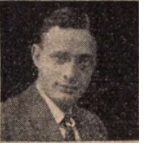
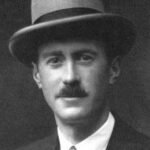
Sandor Ferenczi
Sandor Ferenczi was a Hungarian psychoanalyst and one of the most original early collaborators of Sigmund Freud. His work helped shape clinical thinking about trauma, empathy, technique, and the emotional reality of the analytic relationship. Ferenczi remains important because he made questions of tact, dependence, regression, and the analyst's participation central to psychoanalytic method.
Biography and formation
Sandor Ferenczi was born in Miskolc, Hungary, in 1873 and trained as a physician before becoming one of the central figures of the early psychoanalytic movement. His medical formation, work with nervous disorders, and interest in social and clinical questions prepared him to receive psychoanalysis as more than a theory of symptoms. He encountered Freud’s work in the first decade of the twentieth century and soon became a close colleague, correspondent, and institutional actor in the international movement.
Ferenczi’s position was unusual because he combined loyalty to Freud with a persistent experimental temperament. He helped establish psychoanalysis in Hungary, took part in major congresses, and influenced the formation of analytic training. Yet his importance does not rest only on organizational work. He repeatedly returned to the concrete situation of treatment: how the patient experiences the analyst, how trauma is remembered or repeated, and how technique may either assist or obstruct analytic work.
Major theoretical contributions
Ferenczi’s writing made trauma a central clinical problem. He emphasized that psychic suffering may be linked not only to fantasy but also to overwhelming relational events that the child cannot integrate. His later reflections on confusion between the languages of tenderness and passion became a lasting reference for thinking about abuse, submission, and the defensive accommodation of the child to adult demands.
He also contributed to the study of introjection, transference, regression, and the therapeutic role of affective contact. In contrast to a purely detached model of interpretation, Ferenczi asked how the analyst’s tact and responsiveness could make it possible for deeply injured patients to speak. This did not mean abandoning interpretation. It meant recognizing that interpretation takes place within a relationship that has emotional force of its own.
Clinical method
Ferenczi is often remembered for technical experiments, including active technique, mutual analysis, and an intensified attention to the patient’s experience of analytic authority. Some of these experiments became controversial, and later analysts did not adopt them as simple models. Their value lies instead in the questions they forced psychoanalysis to face. What happens when neutrality becomes coldness? How should the analyst respond when the patient’s compliance hides terror or despair? Can treatment repeat the very domination it seeks to understand?
These questions made Ferenczi an important precursor for later relational, object relations, and trauma-oriented psychoanalytic work. He insisted that analytic listening must include the patient’s vulnerability to the analyst’s words, silences, and failures. This emphasis gave his clinical writing a modern resonance, especially in discussions of countertransference and enactment.
Legacy
Ferenczi died in 1933, after years of productive and sometimes strained dialogue with Freud and other analysts. His reputation fluctuated for decades, partly because his late work challenged established technical ideals. Later generations rediscovered him as a major theorist of trauma, empathy, and the analytic relationship.
His legacy is visible wherever psychoanalysis treats treatment itself as a living emotional field. Ferenczi’s work connects classical psychoanalysis to later concerns with attachment, early relational injury, and the ethics of technique. His place in psychoanalytic history is therefore not peripheral. He represents one of the tradition’s most searching attempts to connect theory with the fragile conditions under which psychic truth can be spoken.
References
- International Psychoanalytical Association, biographical materials on early psychoanalysis
- Freud Museum London, resources on Freud and the early psychoanalytic movement
- Wikimedia Commons, portrait provenance for Ferenczi
Official link: Sandor Ferenczi Society