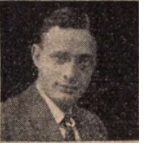
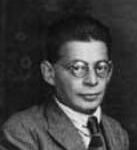
Ronald Fairbairn
Ronald Fairbairn was a Scottish psychoanalyst and one of the decisive figures in the development of object relations theory. He reformulated psychoanalytic motivation by arguing that libido is fundamentally object-seeking rather than primarily pleasure-seeking. Fairbairn remains important because his work shifted attention toward internal relationships, dependence, and the structure of the self.
Biography and formation
William Ronald Dodds Fairbairn was born in Edinburgh in 1889 and trained in philosophy, medicine, and psychiatry before becoming a psychoanalyst. His intellectual background gave his writing a distinctive systematic quality. He worked largely in Scotland, outside the daily center of the London psychoanalytic world, yet his theoretical influence became central to British object relations thought.
Fairbairn’s clinical experience with severe disturbance and early relational difficulty led him to question parts of classical drive theory. He did not reject Freud’s discovery of unconscious conflict, but he reinterpreted the basis of psychic life. For Fairbairn, the person seeks relationships from the beginning. Frustration, trauma, and deprivation shape the internal world because they damage or distort relations with needed objects.
Major theoretical contributions
Fairbairn’s central claim was that libido is object-seeking. This phrase marked a major revision of psychoanalytic theory. Instead of viewing the object mainly as a means of drive discharge, Fairbairn treated the object as the goal of psychic life. The infant does not simply seek pleasure; the infant seeks connection with others who are experienced as necessary for survival and emotional meaning.
This view led to a structural account of the internal world. When external relationships are frustrating or traumatic, the child may internalize bad objects and split the ego in relation to them. Internal saboteurs, exciting objects, rejecting objects, and divided ego positions become ways of preserving a bond even with figures who cause suffering. The tragic logic is that the psyche may cling to bad objects because relationship is more basic than pleasure.
Clinical method
Clinically, Fairbairn’s theory helps explain why patients repeat painful relationships. Repetition is not only a search for instinctual discharge or punishment. It may be an attempt to maintain contact with internal objects that have become part of the self’s structure. The analytic task is therefore not simply to expose impulses but to understand the inner relational world that organizes fear, hope, dependence, and self-attack.
Fairbairn’s work influenced later thinking about schizoid states, borderline organization, trauma, and attachment. It gave psychoanalysis a vocabulary for patients whose central suffering involves emptiness, withdrawal, compulsive loyalty to damaging objects, or fear of genuine dependence. His theory also helped prepare the ground for later relational and interpersonal approaches.
Legacy
Fairbairn died in 1964, leaving a body of work that became increasingly important after his lifetime. Alongside Melanie Klein, Donald Winnicott, Michael Balint, and others, he helped establish the object relations tradition as one of the major post-Freudian developments. His position remains distinct because of the clarity with which he reformulated motivation around object-seeking.
His legacy lies in the relocation of psychoanalysis from a model centered on discharge to one centered on relationship. This did not make conflict disappear; it changed what conflict is about. For Fairbairn, psychic conflict is rooted in the need for others and in the painful internal consequences of loving, needing, and depending on objects who also frustrate or injure the self.
Place in psychoanalytic history
Fairbairn’s importance is especially clear when his work is read beside classical Freudian theory and later attachment-oriented perspectives. He did not simply add relationships to an existing drive model. He reorganized the model around the claim that the psyche is built through relations with objects and through the internal consequences of those relations.
This shift gave later analysts a way to understand patients whose suffering centers on loyalty to damaging internal figures, fear of dependence, and withdrawal from ordinary intimacy. Fairbairn therefore belongs among the thinkers who made object relations theory a major language for describing severe disturbance, early trauma, and the divided structure of self-experience.
References
- Institute of Psychoanalysis, Ronald Fairbairn
- British Psychoanalytical Society, object relations tradition
- Wikimedia Commons, portrait provenance for Fairbairn
Official link: Institute of Psychoanalysis