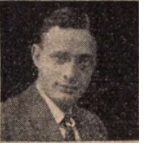
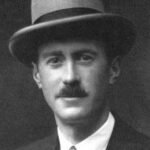
Erich Fromm
Erich Fromm was a German-American psychoanalyst, social philosopher, and humanistic thinker who connected psychoanalysis with ethics, politics, religion, and social theory. His work moved beyond a narrow clinical frame while retaining a psychoanalytic interest in character, desire, authority, and alienation. Fromm remains influential because he interpreted psychic life as inseparable from historical and social forms.
Biography and formation
Erich Fromm was born in Frankfurt am Main in 1900 and grew up in a German Jewish intellectual environment. He studied sociology, philosophy, and psychoanalysis, and his formation brought him into contact with both Freudian theory and the wider critical traditions of European social thought. The rise of National Socialism forced him into exile, first through Switzerland and then the United States, where he became an important public intellectual and teacher.
Fromm’s early connection with the Frankfurt School shaped his lifelong concern with the relation between psychic structure and social organization. Unlike analysts who concentrated primarily on the consulting room, Fromm asked how capitalism, authoritarianism, religion, family life, and modern freedom form characteristic modes of subjectivity. His psychoanalysis therefore had a broad cultural range.
Major theoretical contributions
Fromm developed a humanistic revision of psychoanalysis. He accepted the importance of unconscious motivation but rejected any reduction of human life to biological drives alone. He argued that human beings are marked by separateness, freedom, dependency, and the need for meaningful relatedness. Character, for Fromm, is formed through the ways people solve these existential and social tensions.
His best-known works, including Escape from Freedom, The Art of Loving, and The Sane Society, examine the psychic costs of modernity. Fromm described how freedom can produce anxiety, how people may submit to authoritarian power to escape isolation, and how love requires discipline, knowledge, responsibility, and respect rather than mere sentiment. These ideas made psychoanalysis speak to politics and everyday ethical life.
Clinical and social thought
Fromm’s clinical orientation was closely tied to his social theory. He saw symptoms and character patterns not only as private disturbances but also as expressions of social conditions. The market orientation, for example, described a mode of selfhood in which people experience themselves as commodities to be displayed, exchanged, and evaluated. This concept extended psychoanalysis into a critique of modern forms of identity.
At the same time, Fromm remained concerned with the possibility of freedom and maturity. He did not present psychoanalysis only as uncovering conflict; he also treated it as a route toward greater spontaneity, relatedness, and responsibility. His emphasis on human capacities placed him within humanistic psychoanalysis while distinguishing him from both orthodox Freudianism and purely sociological accounts of behavior.
Legacy
Fromm’s legacy is broad and sometimes contested. Some classical analysts considered his revisions too distant from Freud’s metapsychology, while social theorists valued his ability to connect inner life with modern institutions. His work continues to be read in psychoanalysis, sociology, political theory, religious studies, and humanistic psychology.
His importance for psychoanalysis lies in the insistence that symptoms and character cannot be separated from the worlds in which people live. Fromm made alienation, conformity, destructiveness, love, and freedom psychoanalytic problems. That extension remains useful for readers seeking to understand how the unconscious is shaped not only by family history but also by culture, labor, authority, and historical crisis.
Place in psychoanalytic history
Fromm occupies a distinctive place because he translated psychoanalytic questions into a language that could address mass society without abandoning the depth of inner conflict. He read symptoms, conformity, destructiveness, and loneliness as signs of a wider organization of life. This made his work especially useful for readers interested in the relation between clinical theory and social critique.
His distance from orthodox Freudian doctrine should not obscure his psychoanalytic importance. Fromm preserved the central question of unconscious motivation while asking how social arrangements teach people what to desire, fear, admire, and repress. In that sense, his work remains part of the broader psychoanalytic attempt to understand subjectivity historically.
References
- Erich Fromm Institute, biography and bibliography
- Encyclopaedia Britannica, Erich Fromm
- Wikimedia Commons, portrait provenance for Fromm
Official link: Erich Fromm Institute