Otto Rank
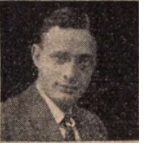
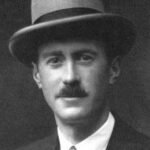
Otto Rank was an Austrian psychoanalyst, writer, and early member of Freud's inner circle whose work connected psychoanalysis with myth, creativity, birth, and the problem of separation. He helped shape the early movement as editor, secretary, and theorist before developing an independent direction. Rank remains important because he opened psychoanalysis toward art, will, and existential dimensions of development.
Biography and formation
Otto Rank was born in Vienna in 1884 and entered Freud’s circle as a young scholar with a strong interest in literature, myth, and cultural symbolism. Freud recognized his intellectual gifts, and Rank soon became one of the most active figures in the early psychoanalytic movement. He served as secretary of the Vienna Psychoanalytic Society, edited important psychoanalytic publications, and contributed to the institutional consolidation of the field.
Rank’s formation differed from that of many medical analysts. His interests were literary, philosophical, and anthropological as much as clinical. This background allowed him to read psychoanalysis through myths, legends, artistic production, and the symbolic structures of culture. From the beginning, his work suggested that psychoanalysis could interpret more than individual symptoms.
Major theoretical contributions
Rank’s early work on the myth of the birth of the hero examined recurring narrative forms in which origins, parentage, abandonment, and recognition are symbolically organized. This study helped establish psychoanalytic interpretation as a method for cultural material. It also anticipated Rank’s later concern with birth, separation, and the individual’s struggle to emerge from dependence.
His most controversial contribution was The Trauma of Birth, where he argued that birth itself has a formative psychic significance. Freud and many colleagues resisted this emphasis because it seemed to displace the centrality of the Oedipus complex and infantile sexuality. Yet Rank’s argument made separation, individuation, and the anxiety of emergence major psychoanalytic themes.
Clinical method and independent work
Rank eventually moved away from orthodox Freudian technique. He became interested in shorter treatment, the patient’s present experience, and the therapeutic relation as a site where dependence and autonomy are worked through. His later writings gave more emphasis to will, creativity, and the individual’s capacity to shape life rather than merely uncovering repressed material from the past.
This shift placed Rank at a distance from Freud’s circle but also made him a precursor for later existential, humanistic, and relational approaches. His clinical thinking treated the analytic encounter as a drama of separation and self-formation. The patient was not only a bearer of symptoms but also a person struggling with freedom, fear, attachment, and creative possibility.
Legacy
Rank died in 1939, after a career that moved from close collaboration with Freud to a more independent and controversial position. His influence can be seen in later attention to creativity, art, birth, will, and the therapeutic relationship. Although not always placed at the center of psychoanalytic histories, he remains one of the most intellectually adventurous members of the early movement.
Rank’s legacy is especially relevant where psychoanalysis meets cultural interpretation and existential psychology. He widened the field’s vocabulary by asking how human beings separate, create, and confront the anxiety of independence. His work remains a reminder that psychoanalysis developed not only in medical clinics but also in dialogue with literature, myth, and modern questions of selfhood.
Place in psychoanalytic history
Rank’s place in psychoanalytic history is marked by both proximity and rupture. He was close to Freud during the institutional formation of the movement, yet his later work showed how quickly psychoanalysis could generate internal disagreement about origins, technique, and the meaning of anxiety. This makes him a key figure for understanding psychoanalysis as a living field rather than a closed doctrine.
His attention to myth, art, and creativity also widened the cultural reach of analytic interpretation. Rank treated artistic production as a serious expression of psychic struggle, not as decorative material added to clinical theory. Through that emphasis, he helped keep psychoanalysis connected to literature, biography, religion, and the symbolic forms through which human beings give shape to conflict.
References
- Otto Rank Association, biographical resources
- Encyclopaedia Britannica, Otto Rank
- Wikimedia Commons, portrait provenance for Rank
Official link: Otto Rank Association


.jpg)