Margaret Mahler
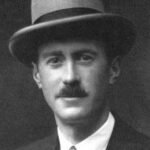
Margaret Mahler was a Hungarian-American physician and psychoanalyst best known for the theory of separation-individuation. Her work described how the infant gradually differentiates from the caregiver while developing a more stable sense of self and object. Mahler remains important because she gave psychoanalytic development theory a detailed account of early autonomy, dependence, and emotional separation.
Biography and formation
Margaret Mahler was born in Sopron, Hungary, in 1897 and trained in medicine before becoming a psychoanalyst and child psychiatrist. Her European formation was marked by pediatrics, psychiatry, and psychoanalytic thought. After emigration to the United States, she developed major clinical and observational work on early childhood, psychosis, and development.
Mahler’s work stood at the intersection of psychoanalysis and child observation. She was interested in how the infant moves from early dependence toward a differentiated sense of self. This question required attention not only to fantasy and conflict but also to ordinary developmental processes: bodily growth, locomotion, visual contact, maternal availability, and the child’s changing relation to distance.
Major theoretical contributions
Mahler’s central contribution is the theory of separation-individuation. She described development as a process through which the child emerges from an early state of dependence into greater differentiation from the caregiver. Separation refers to the child’s gradual sense of being distinct from the mother or primary caregiver. Individuation refers to the growth of autonomous functions, identity, and self-experience.
Her account included phases such as differentiation, practicing, rapprochement, and the movement toward object constancy. The practicing phase emphasizes the child’s excitement in movement and exploration, while rapprochement describes the tension between autonomy and renewed need for emotional contact. These ideas gave psychoanalysis a concrete vocabulary for the drama of early independence.
Clinical method and developmental observation
Mahler’s theory was grounded in clinical work and structured observation of young children. She studied how children use the caregiver as a secure emotional point of return while exploring the world. Her model made it possible to think developmentally about later anxieties involving abandonment, engulfment, dependency, and unstable self-other boundaries.
Although later infant research revised aspects of her earliest assumptions, the theory of separation-individuation remained influential because it captured a clinically recognizable problem. Patients may struggle either to separate without panic or to depend without feeling swallowed. Mahler’s language helped analysts describe these tensions without reducing them to a simple conflict between love and aggression.
Legacy
Mahler died in 1985, leaving a major influence on child psychoanalysis, developmental theory, and clinical work with early disturbance. Her ideas became especially important in discussions of borderline organization, object constancy, and the formation of identity. The term separation-individuation continues to be used in psychoanalytic and developmental contexts, even where details of the original model are debated.
Her legacy lies in the careful description of psychic growth as a relational achievement. A self does not become independent by escaping relation altogether. It becomes more stable through a changing pattern of closeness, distance, recognition, and return. Mahler’s work gave psychoanalysis one of its most enduring accounts of how autonomy develops from dependence.
Place in psychoanalytic history
Mahler’s place in psychoanalytic history is linked to the effort to describe early development with greater observational and clinical detail. She gave analysts a staged language for the child’s movement between dependence and autonomy, and this language became especially influential in work with patients whose sense of self and other feels unstable or fragile.
Later research questioned some assumptions about the earliest infant state, especially the idea of a normal autistic or symbiotic phase in the strong form sometimes associated with her model. Even so, the clinical value of separation-individuation endured. Mahler’s work remains useful because it names the emotional difficulty of becoming separate while still needing relation.
References
- Psychoanalysis Wiki, related article on Separation-Individuation
- Encyclopaedia.com, Margaret Mahler overview
- Wikimedia Commons, portrait provenance for Mahler
Official link: Margaret S. Mahler Psychiatric Research Foundation



.jpg)