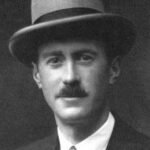
Anna Freud
Anna Freud (1895–1982) was an Austrian-British psychoanalyst and the youngest daughter of Sigmund Freud. While she began her career as a schoolteacher, she became one of the most influential figures in psychoanalytic theory and practice, particularly in the field of child psychoanalysis. Her systematic observations of children’s development laid the groundwork for developmental psychoanalysis, and her work on defense mechanisms expanded and refined the Freudian framework in ways that continue to shape clinical practice today. She is widely regarded as one of the founders of child psychoanalysis and developmental psychopathology.
Biography
Anna Freud was born on December 3, 1895, in Vienna, Austria, the youngest of six children in the Freud family. Her childhood was marked by the intellectual atmosphere of the Freud household, where psychoanalysis was a constant presence. She pursued a career in teaching, working as a primary school teacher before turning to psychoanalysis. Her own analysis with her father, conducted in the 1920s, was a significant turning point in her professional trajectory.
She joined the Vienna Psychoanalytic Society in 1924 and quickly became an active member of the psychoanalytic community. When the Nazis annexed Austria in 1938, Anna Freud was among those who helped secure the emigration of family members and colleagues. She herself relocated to London in 1938 or 1939, where she joined the British Psychoanalytic Society and continued her work. She spent the remainder of her life in London, dying on October 9, 1982.
Throughout her career, Anna Freud maintained a close but sometimes complicated relationship with her father’s legacy. She was his dedicated protector and literary executor, yet she developed a distinctly independent theoretical voice that extended rather than merely repeated Freud’s work.
Contributions to Psychoanalysis
Child Psychoanalysis
Anna Freud’s most enduring legacy lies in her founding role in child psychoanalysis. She was among the first analysts to insist that children could and should be treated psychoanalytically, adapting clinical techniques to suit the developmental capacities and limitations of young patients. She established the Hampstead Child-Therapy Course and Clinic in London in 1947, which became a major center for training, research, and clinical work with children.
Her approach combined meticulous observation of children’s behavior with a deep engagement with psychoanalytic theory. She believed that the analyst must understand the normal developmental line of the child in order to recognize and treat pathology. This focus on developmental norms became a hallmark of her clinical and theoretical work.
Developmental Lines
One of Anna Freud’s most original contributions was her concept of developmental lines. Rather than viewing development as a simple progression, she mapped out the trajectories along which children move from immature to more mature forms of functioning. These lines addressed domains such as the progression from dependent to independent object relationships, from body-centered to verbally mediated communication, and from primary to secondary process thinking.
The concept of developmental lines provided clinicians with a systematic way to assess where a child stood relative to normal development and to identify the specific deficits that required clinical attention. It represented a significant theoretical advance over Freud’s stage-based model, offering a more nuanced and clinically useful map of psychological growth.
Diagnostics and Assessment
Anna Freud was deeply invested in the problem of psychiatric diagnosis in childhood. She developed a diagnostic profile that moved beyond simple categorization of symptoms to describe the whole pattern of a child’s psychological functioning. This profile encompassed the child’s drive development, quality of object relationships, adaptive and defensive organizations, and level of social maturity.
Her diagnostic approach emphasized that accurate assessment required understanding the specific configuration of a child’s strengths and vulnerabilities, not merely identifying a label. This clinical sensibility anticipated many of the concerns that would later animate modern approaches to developmental psychopathology.
Defense Mechanisms
Anna Freud made systematic contributions to the understanding of defense mechanisms that rivaled those of her father in their clinical depth. While Sigmund Freud first identified and described several defense mechanisms, Anna Freud catalogued, classified, and refined the understanding of how the mind protects itself from anxiety and unmanageable psychic conflict.
She distinguished between neurotic and immature defenses, observing that specific patterns of defense use characterized different diagnostic groups. For instance, children with neurotic disorders tended to employ repression, displacement, and reaction formation, while children with severe personality disturbances relied more heavily on splitting, projection, and denial.
Her work on defense mechanisms was not merely taxonomic. She was interested in the developmental origins of each defense, the clinical situations in which they arose, and the ways in which they could be modified through analytic work. This approach made her understanding of defense a cornerstone of psychoanalytic case formulation.
The Concept of Normality
One of Anna Freud’s most distinctive theoretical commitments was to the study of normal development. While much of psychoanalysis had focused on pathology, she insisted that clinicians needed a thorough understanding of what normal development looked like in order to recognize and treat abnormality. This conviction led her to undertake long-term observational studies of children, both in the clinic and in collaboration with educators.
Her concept of the “normal child” was not an idealized or normative construct. Rather, she was interested in the range of variations that could be considered within the spectrum of healthy development. This empirical approach to normality distinguished her work from much psychoanalytic writing that tended to pathologize developmental diversity.
Legacy
Anna Freud’s influence extends across child psychoanalysis, developmental psychology, and clinical practice. The Hampstead Clinic, now known as the Anna Freud National Centre for Children and Families, continues to be a leading institution in the field. Her diagnostic profile remains a widely used clinical tool, and her framework for understanding developmental lines has been incorporated into contemporary developmental psychopathology.
Her theoretical contributions are often overshadowed by her father’s fame, but in the field of child psychoanalysis and ego psychology, she is regarded as a primary figure in her own right. Her insistence on empirical observation, developmental nuance, and clinical precision established standards for psychoanalytic work with children that remain influential today.
References
Freud, A. (1965). Normality and Pathology in Childhood: Assessments of Development. Hogarth Press.
Freud, A. (1936). The Ego and the Mechanisms of Defence. Hogarth Press.
Freud, A. (1949). Introduction to Psychoanalysis for Parents. Hogarth Press.
Young-Bruehl, E. (1988). Anna Freud: A Biography. Summit Books.
Peters, U. H. (1985). Anna Freud: A Life Dedicated to Children. Dickinson.