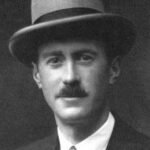
Erik Erikson
Erik Homburger Erikson (1902-1994) was a German-American developmental psychologist and psychoanalyst best known for his theory of psychosocial development. Growing up with his mother and a series of stepfathers after his father abandoned the family, Erikson’s own developmental history profoundly influenced his theory. His eight-stage model of development across the lifespan remains one of the most influential frameworks in developmental psychology.
Biographical Background
Erik Erikson was born in Frankfurt, Germany, to a Jewish mother, Karla Abrahamsen, who was later married to physician Theodor Homburger. The confusing details of his parentage—he was led to believe his mother was his sister—shaped his later interest in identity formation. After training as a psychoanalyst, Erikson emigrated to the United States, where he worked at Harvard, Yale, and the Austen Riggs Center.
Erikson’s developmental theory drew heavily on his observations of children and his understanding of the psychosocial challenges facing immigrants and minorities in America. His work with Native American communities and his studies of childhood and adolescence informed his understanding of identity development.
Psychosocial Development Theory
Erikson proposed that development occurs across eight stages spanning the entire lifespan, each presenting a specific psychosocial crisis that must be resolved for healthy development. These crises involve tensions between opposing tendencies—one positive, one negative—that must be balanced for successful development.
The stages are: Trust vs. Mistrust (infancy), Autonomy vs. Shame and Doubt (toddlerhood), Initiative vs. Guilt (preschool), Industry vs. Inferiority (school age), Identity vs. Role Confusion (adolescence), Intimacy vs. Isolation (young adult), Generativity vs. Stagnation (adulthood), and Integrity vs. Despair (old age).
Identity and the Life Cycle
Erikson’s concept of identity formation has been enormously influential. He viewed adolescence as a critical period for identity development, when individuals must integrate childhood identifications, biological maturation, social roles, and ideological commitments into a coherent sense of self. This process continues throughout life but is particularly intense during adolescence.
His concept of the “identity crisis” has entered common parlance, describing the struggle to establish a coherent sense of self. Erikson understood that healthy identity development requires a supportive social environment that allows experimentation with different roles and values.
Legacy
Erikson’s theory has profoundly influenced developmental psychology, education, and clinical practice. His emphasis on the social context of development, the importance of identity formation, and the ongoing nature of development throughout life continue to inform contemporary understanding of human development.
References
Erikson, E. (1950). Childhood and Society. Norton.
Erikson, E. (1968). Identity: Youth and Crisis. Norton.