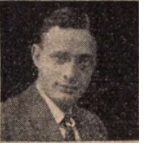
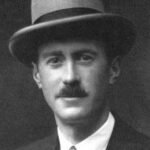
Heinz Kohut
Heinz Kohut (1913–1981) was an Austrian-American psychoanalyst and psychiatrist whose work fundamentally transformed psychoanalytic theory and practice, particularly in the understanding and treatment of narcissistic disturbances and severe personality disorders. He is universally recognized as the founder of Self Psychology, a major psychoanalytic school that reconceptualized the nature of the self, the origins of psychopathology, and the therapeutic process itself. His clinical innovations shifted the psychoanalytic emphasis from drive satisfaction and conflict to the vicissitudes of narcissistic regulation and the developmental role of empathic resonance between self and other.
Biography
Heinz Kohut was born on May 3, 1913, in Vienna, Austria, into a cultured and prosperous Jewish family. He studied medicine at the University of Vienna, graduating in 1938 — the year of the Anschluss. Facing Nazi persecution, Kohut emigrated to the United States, where he completed his psychiatric training at the University of Chicago. He joined the Chicago Institute for Psychoanalysis and spent most of his career in Chicago, later becoming a training analyst at the New York Psychoanalytic Institute and a professor at the University of Chicago.
Kohut’s personal experience of displacement and cultural rupture shaped his sensitivity to the human need for stability, recognition, and a sense of belonging — themes that would later dominate his theoretical work. He married Elizabeth Meyer in 1945, and the couple had two daughters. He died in Chicago on October 8, 1981.
Self Psychology: Core Principles
The Self
For Kohut, the self was not merely a construct organized around drive derivatives, as in classical Freudian theory. It was the central psychological agency — a pre-existing structure that sought to realize its ambitions, ideals, and sense of cohesiveness. A strong, vital self was the foundation of mental health. Psychopathology arose not primarily from drive conflict but from disturbances in the self and its specific needs for mirroring, idealization, and twinship.
Narcissism and Its Transformations
Kohut’s most radical move was to rescue narcissism from its pathologized status in psychoanalytic theory. In classical analysis, narcissism was understood almost exclusively as a regressive, pathological phenomenon — a withdrawal of cathexis from external objects. Kohut proposed instead that healthy, mature narcissism was a legitimate and essential part of human psychological life. It manifested in such qualities as humor, creativity, empathy, and the capacity for civilizational achievement. Far from being merely pathological, healthy narcissism was the engine of meaningful human striving.
The Selfobject Concept
Central to Self Psychology was the concept of the selfobject — an experience that the self has of another person as part of its own psychological organization. A selfobject is not understood as a separate subject with independent motivations, but as something experienced primarily in terms of its function for the self: it provides what the self needs to maintain its cohesion, vitality, and direction.
Selfobjects serve three essential functions:
– **Mirroring**: the selfobject reflects and validates the child’s grandiosity and exhibitionism, conveying the message that the child’s ambitions and strivings are valued and welcomed
– **Idealization**: the selfobject is experienced as possessing the perfection, calm, and power that the child lacks but longs for; the child can then quietly merge with and draw strength from the idealized selfobject
– **Twinship/Alter-ego**: the selfobject provides a sense of essential likeness and alikeness, confirming that the self exists in a recognizable form in the world
These experiences of attuned selfobject responsiveness constitute the matrix from which a firm, cohesive self emerges.
Pathology of the Self
Developmental Arrest
Kohut understood severe personality pathology — including narcissistic personality disorder, borderline states, and some forms of perversion — not as expressions of drive conflict but as developmental failures of the self. When the caregiving environment fails to provide adequate selfobject experiences, the self remains fragmented, weak, or unstable. The grandiose self and the idealized selfobject imago, rather than undergoing healthy structuralization, remain split off and unintegrated, producing the characteristic disturbances of will, affect regulation, and self-cohesion seen in narcissistic and borderline conditions.
Transference Configurations
In analytic treatment, patients with self pathology characteristically develop specific transference configurations:
– **Mirror transference**: the patient seeks from the analyst the mirroring that was lacking in childhood — looking to be seen, validated, and admired
– **Idealizing transference**: the patient invests the analyst with the perfection and omnipotence that the early caregiving environment failed to provide
– **Twinship transference**: the patient experiences the analyst as fundamentally similar, a confirmation of the self’s existence and vitality
These transferences are not resistances or repetitions of drive conflict, as in classical theory. They are selfobject needs seeking restoration within the analytic frame. Kohut insisted that the analyst must tolerate and work within these transferences, providing the empathic attunement the patient’s self requires for structural change.
Clinical Technique
Kohut’s therapeutic stance diverged significantly from classical analytic abstinence. He emphasized empathic immersion — the analyst’s disciplined effort to understand the patient’s inner world from within the patient’s own perspective — as the essential tool of psychoanalytic investigation and cure. The analyst’s empathy, when accurate and reliably communicated, serves as a selfobject that allows the patient’s self to consolidate and grow.
Kohut was also notable for his relaxed attitude toward the management of certain parameters, including the question of the frequency of sessions. He maintained that for severely disturbed narcissistic and borderline patients, multiple sessions per week — sometimes daily — were often necessary to provide the holding environment required for selfobject re-establishment.
His clinical writings, particularly The Analysis of the Self (1971) and The Restoration of the Self (1977), remain classics of psychoanalytic literature and are widely taught as foundational texts in psychoanalytic self psychology.
Legacy
Kohut’s influence extends far beyond the specific school he founded. His reconceptualization of narcissism, his emphasis on the self as a central theoretical construct, and his clinical focus on empathic attunement influenced Object Relations theory, Relational psychoanalysis, and contemporary relational approaches across the psychoanalytic spectrum. His insistence on the legitimacy of narcissistic needs and the centrality of self-selfobject relationships opened analytic theory to dimensions of human experience that had previously been marginalized or pathologized.
The Heinz Kohut Society (now the International Association of Psychoanalytic Societies) continues to promote and develop his clinical and theoretical legacy. His work remains indispensable reading for anyone engaged in psychoanalytic practice with personality disturbances.
References
Kohut, H. (1971). The Analysis of the Self. International Universities Press.
Kohut, H. (1977). The Restoration of the Self. International Universities Press.
Kohut, H. (1984). How Does Analysis Cure? University of Chicago Press.