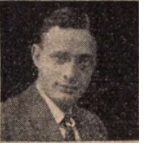
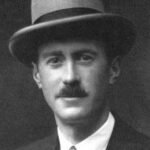
Carl Jung
Carl Gustav Jung (1875-1961) was a Swiss psychiatrist and psychoanalyst who founded analytical psychology, one of the major schools of psychoanalytic theory. Jung’s work has had a profound impact on psychology, psychiatry, psychotherapy, and culture far beyond the clinical setting. His exploration of the unconscious, his development of concepts like archetypes and the collective unconscious, and his engagement with Eastern spirituality created a framework that continues to influence contemporary thought in numerous fields.
Jung’s work is closely related to the entries on Collective Unconscious, Archetypes, and Sigmund Freud.
Early Life and Background
Born in Kesswil, Switzerland, in 1875, Jung was the only surviving child of a Protestant pastor. His father Paul’s declining health and emotional absence created an atmosphere of religious intensity and isolation in the family home. This childhood experience of a distant father figure would later influence Jung’s understanding of the psyche and his concept of the animus—the masculine component in the female psyche.
Jung’s childhood was marked by vivid imaginations and visions, experiences he later understood as expressions of the collective unconscious. These early experiences, combined with his scientific training, shaped his unique approach to understanding the human mind—a approach that sought to bridge the gap between empirical science and spiritual wisdom.
Collaboration and Break with Freud
Jung’s relationship with Sigmund Freud, beginning in 1906, represented one of the most significant partnerships in the history of psychoanalysis. Their correspondence developed into a deep personal and intellectual friendship, with Freud seeing Jung as his designated successor and the future of the psychoanalytic movement. Jung served as president of the International Psychoanalytic Association from 1911 to 1914.
However, fundamental theoretical differences led to their eventual break in 1913. Jung could not accept Freud’s exclusive emphasis on sexuality as the primary motivator of human behavior, nor his purely personal understanding of the unconscious. Jung’s concept of a collective, universal unconscious containing inherited patterns of experience—archetypes—represented a radical expansion of psychoanalytic theory that Freud could not accept. Their personal relationship deteriorated acrimoniously, with lasting consequences for the development of psychoanalytic thought.
The Collective Unconscious and Archetypes
Jung’s most original contribution to psychology was his concept of the collective unconscious—a layer of the psyche containing inherited, universal patterns that are not derived from personal experience. Unlike Freud’s concept of the repressed unconscious, which contained personally acquired memories and desires, Jung’s collective unconscious contained the accumulated wisdom of human evolution—the fundamental patterns and images that characterize human experience across cultures and epochs.
These inherited patterns, which Jung called archetypes, manifest in recurring symbols, images, and themes found in myths, religions, dreams, and fantasies worldwide. The archetype of the Hero, the Great Mother, the Wise Old Man, and the Shadow represent universal patterns of human experience. Jung argued that understanding these archetypal patterns could lead to psychological healing and individuation—the process of becoming one’s true self.
Psychological Types and Extraversion-Introversion
Jung’s work on psychological types, particularly his concepts of extraversion and introversion, has become among his most widely applied ideas. In “Psychological Types” (1921), Jung proposed that individuals could be characterized by their dominant attitude toward the external world (extraversion) or internal world (introversion), as well as their preferred functions of thinking, feeling, sensing, and intuition.
These type distinctions have been enormously influential, forming the basis for numerous personality typing systems used in business, education, and clinical settings. The Myers-Briggs Type Indicator (MBTI), one of the most widely used personality assessments, is directly derived from Jung’s typological framework.
Individuation and the Process of Self-Realization
The concept of individuation represents Jung’s model of psychological development—the process through which an individual becomes a integrated, whole person. This process involves confronting and integrating the shadow, the anima or animus, and the Self—the central archetype representing wholeness and the unified psyche.
Jung believed that psychological health required individuals to engage with their unconscious, not simply to repress its contents. Through dream analysis, active imagination, and engagement with cultural and spiritual practices, individuals could develop a relationship with the unconscious and achieve greater psychological maturity. This process was not about eliminating the unconscious but about establishing a creative dialogue between conscious and unconscious elements of the psyche.
Legacy and Contemporary Relevance
Jung’s influence extends far beyond clinical psychology into art, literature, religion, mythology, anthropology, and popular culture. His ideas about archetypes appear in literary criticism, film theory, and comparative mythology. His approach to dream interpretation continues in Jungian analysis, a distinct therapeutic modality practiced worldwide.
Contemporary neuroscience has provided partial support for Jung’s intuitions about the mind’s layered structure, while his emphasis on meaning, spirituality, and the symbolic life addresses concerns often neglected in mainstream psychology. Whether one accepts his more speculative claims or not, Jung’s fundamental insight—that the human psyche contains depths that exceed our ordinary conscious awareness—continues to resonate with those seeking to understand the full range of human experience.
Frequently Asked Questions
How did Carl Jung differ from Freud?
Jung differed from Freud by expanding the unconscious beyond repressed personal material and by emphasizing archetypes, symbolism, individuation, and the collective unconscious.
What is analytical psychology?
Analytical psychology is Jung’s school of depth psychology, centered on individuation, symbols, dreams, archetypes, and the relation between conscious and unconscious life.
References
Jung, C.G. (1921). Psychological Types. Princeton University Press.
Jung, C.G. (1969). The Archetypes and the Collective Unconscious. Princeton University Press.
Jung, C.G. (1961). Memories, Dreams, Reflections. Vintage Books.